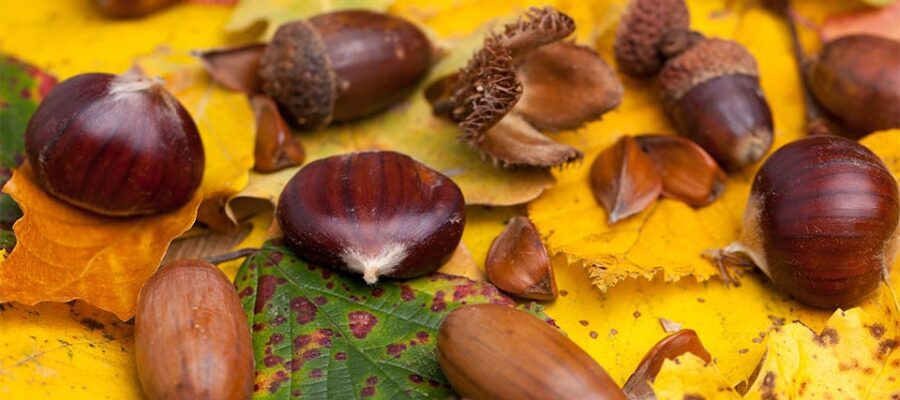
Autumn has arrived, bringing with it the start of yet another walnut season. Alongside familiar favorites like hazelnuts, walnuts, and chestnuts, there are also lesser-known options such as acorns and beechnuts that can be consumed under specific conditions. Locally sourced dried fruits offer nutritious components and a well-balanced ratio of fatty acids. In this context, let‘s explore three types of dried fruit you can enjoy raw, as well as two varieties that, while not edible in their raw form, can still be enjoyed after proper preparation.
You can enjoy these nuts raw
hazelnut
The hazelnut belongs to the birch family. The hazelnut that we collect in our latitudes is usually the common hazelnut. This grows like a shrub. The hazelnut we buy in shops usually comes from the hazel tree and is called Lambertshasel. About 90% of these come from Italy or Turkey. Hazelnuts have a very high fat content of around 60%, around half of these fats are healthy monounsaturated and polyunsaturated fatty acids. Hazelnut is also an important supplier of vitamin E and B vitamins. It is also rich in potassium, calcium, magnesium and zinc.
walnuts
We can also eat the nut directly after breaking the shell. Walnuts have a reputation for being particularly beneficial to the brain. This could also be due to the high percentage of healthy fats, in particular linolenic acid, an omega-3 fatty acid, which is also important for the health of our brain. Due to its high fat content, the walnut is a very oil-rich nut. It is also an important supplier of important tocopherols, i.e. derivatives of vitamin E, as well as iron, zinc, magnesium and potassium.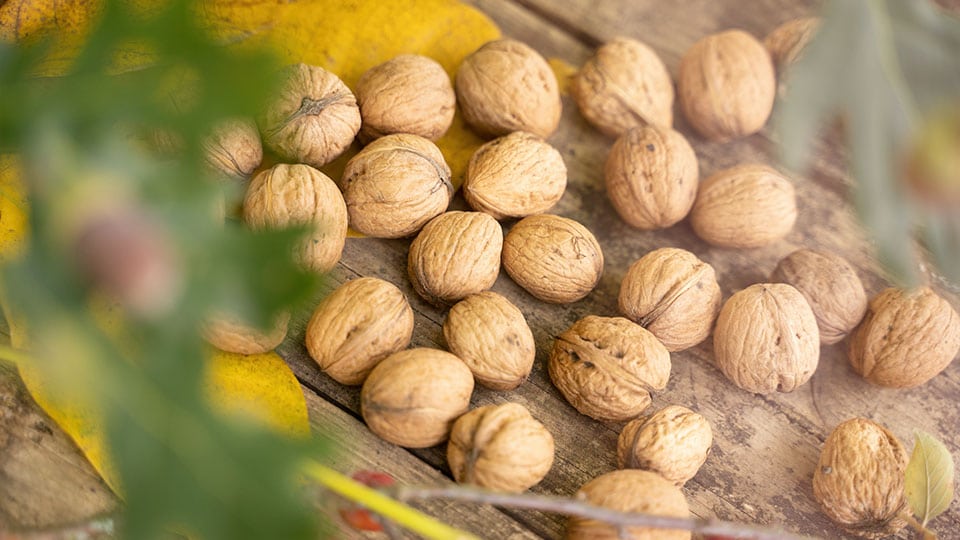
Chestnut (chestnuts, chestnuts)
The third nut that we can eat raw is the chestnut. The chestnut belongs to the beech family. Chestnuts, i.e. chestnut fruits, are much lower in fat, but have a higher percentage of complex carbohydrates and proteins. In comparison, it also contains more vitamin C (27 mg per 100 g), as well as magnesium, calcium and potassium. The chestnut can also be eaten raw, but it can become difficult to digest. A quick tip here is to leave the nut for a week after picking it before eating it.
Read more What is an onion wrap? | Home remedies for the winter
Never miss harvest time again
Of course, nuts are harvested in autumn, but so as not to miss any harvest time, we thought we’d create a seasonal calendar that lists many wild plants, wild fruits and even some nuts that should be harvested at that time. Often it simply comes too late and then you have to wait a whole year. It’s a shame and it doesn’t have to be this way. This is how the idea of developing a harvest calendar for you was born. We designed it independently and you can find the seasonal wild herb calendar in our online shop at . Acorns, chestnuts and beechnuts are also found there. By the way, you can use it again every year!
These nuts cannot be eaten raw, but are still edible
beechnuts
The beechnut also belongs to the beech, but to the common beech. The shell of the walnut may resemble that of a chestnut because it is also equipped with thorns; the die is square. Since beechnuts contain hydrocyanic acid and oxalic acid, you must be careful when consuming them and do not eat them raw. They can be boiled, fried and roasted. Beechnuts are also very high in calories. They contain a large amount of healthy, unsaturated fats and carbohydrates. They are also a good source of B vitamins, sodium, potassium, zinc and iron.
Use wild autumn herbs
Would you like to read this and many other articles on wild herbs in autumn in paper format? Then take a look at our autumn edition Kräuterkeller magazine (available here). You can purchase it in digital and printed format in our herbalist’s shop
Other topics in the autumn issue: recipes with rose hips, phytotherapy for sleep disorders, use of quince, our favorite pumpkins and dandelion root as an excellent source of bitter substances.
Acorns
The acorn is also edible, but not raw. Due to its high tannin content it can cause severe abdominal cramps with vomiting and diarrhea. To make them edible you need to peel them, heat them and soak them for a few days to eliminate the tannins. The water changes color. This should be changed daily until the acorns no longer release tannins and the water remains clear. You can then, for example, grind the acorns and make bread from them. Thanks to its composition of carbohydrates, proteins and mono- and polyunsaturated fatty acids, the acorn is a perfect and balanced source of nutrients. They also provide us with important minerals such as calcium, potassium and magnesium.
Read more Real Laurel: How to Use It in Your Medicine Cabinet?
In combination with the seasonal calendar: our book
To complement the seasonal calendar we have published our 160-page book «With wild herbs and medicinal plants all year round». There you will find many illustrated portraits of local wild herb plants.
latest posts published

how to recognize the problem and how to save your lawn
Growing Peas for Beginners: Here’s What You Need to Know
3 ways to clean the gaps between pebbles – without chemicals!
Collecting sprouts: the most common mistakes
my review on the greenhouse harvest –
Which plants and how to cover the garden at the end of winter?

Take care of the graves in autumn, so that they are beautiful even in spring

what you will find in Lithuania if you decide to try it

English style: how to create one in Lithuania