Almost everyone knows about rowan berries, but there are many myths surrounding the fruits of rowan trees. In this article you will learn how to grow the so-called rowan berries November you can safely use it and enjoy it after the first frost – and what you should definitely pay attention to.
Rowan berries
Rowan berries, scientifically referred to as Sorbus aucuparia, may not be unfamiliar to many people. From early childhood, you might have heard warnings regarding their consumption. These vibrant, bright red berries can appear quite tempting and appetizing at first glance, yet consuming them raw and in substantial amounts can lead to unpleasant health effects such as vomiting and diarrhea.
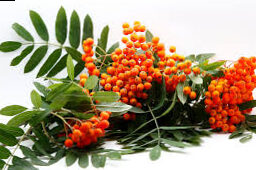
A similar caution applies to elderberries, which should also be avoided in their raw state if eaten in large quantities. Despite these precautions, elderberries have maintained their place in culinary traditions, being frequently used in a variety of recipes to create flavorful juices, jellies, and jams. On the other hand, the uses of rowan berries—or rowan fruits—seem to have largely faded into obscurity, with their culinary and practical applications all but forgotten over time.
Read more Which varieties are edible and what you need to pay attention to
Why is the rowan berry inedible raw?
Rowan berries should not be eaten raw. But raw rowans are so extremely bitter that you would hardly eat more than one. The main culprit for this is parasorbic acid. This is the extremely bitter substance that can cause vomiting and diarrhea. However, cooking breaks down the parasorbic acid and rowan berries are edible after cooking. For example, from rowan fruits you can prepare a puree, fruit jam or syrup. Rowan berries can also be processed with alcohol. Here, for example, rowan schnapps is popular.
Reading material for cold days
You can also find ours in our herbalist’s shop Magazine of the Cantina delle Erbe (available here). There we would like to introduce you to wild herbs and natural life. Every season has its special plants. This is why the seasons guide us in the creation of this magazine.
How to recognize rowan and rowan berries?
The mountain ash is found in local forests or parks and blooms beautifully in May with its large, white, umbel-like flowers. It can grow up to 25 meters tall. The beautiful trees are often planted to make the city green, but wild rowan trees can also be found. Botanically speaking, it is with the Apple related. This can be clearly seen in the fruits. From August onwards they become bright red and resemble small apples. The leaves of the mountain ash are alternately arranged with usually 15 pinnate, serrated leaves, which then turn bright yellow and orange in autumn
Rowan ingredients
The rowan berry contains a particularly high amount of vitamin C, tannins, sorbitol, sorbitan acid, citric acid, malic acid, bitter substances, pectin, essential oils and also parasorbic acid, which is slightly toxic in raw form. However, parasorbic acid decomposes during the cooking process and during heating. This also reduces the high vitamin C content, as vitamin C is sensitive to heat. However, raw consumption is not recommended. You should therefore resort to other sources of vitamin C (e.g Homemade rosehip powder).
Read more This wild grass is hard to beat and grows everywhere in April, no one knows
Rowan jam with spices
Ingredients for four people:
- 500 g of bird bears
- 2 apples or 2 pears
- Water or a little apple juice
- a tonka bean
- something Cinnamo
Preparation of rowan puree
The rowan berries are placed together with the apples or pears in a pan with water or apple juice and cooked for 15 minutes over medium heat with the lid on until a puree forms. The amount of liquid needed depends on the size of the berries. It’s best to use a little less at first so that the berries are covered but not floating. You can always add more water afterwards. Shortly before the end of the preparation time you can Cinnamon and if you prefer, add tonka beans. The tonka bean has a slightly vanilla aroma and should be grated with a kitchen grater. After 15 minutes of cooking you can filter the puree with a sieve. Filled hot, it can be stored in the cellar for several months in jars with screw caps that create a vacuum. But you can also freeze the puree after it has cooled. For example, it tastes good pancake or rice pudding is wonderful.
Learn about and use local wild herbs
Our approach is to keep the cient knowledge of medicinal plants alive. We have learned a lot from our parents and grandparents and would like to pass it on. That’s why we started our own little publishing house called “The Modern Herb Witch”. Here we write and publish our books and develop our ideas in this way Seasonal calendar of wild herbs (available here). Our book»With wild herbs and medicinal plants all year round“(available here) is a seasonal companion that introduces you to many local and precious wild herbs. Of course, the wild carrot is also represented there. Our reader Claudia Goßler writes about our book:
Rowan in November: why the first frost is important
Rowanberries are particularly interesting in November because the first frost plays a crucial role in their usability. Due to the cold, rowan fruits become more delicate and lose part of their bitter substances, which makes them more digestible. This natural process helps break down the parasorbic acid in fresh berries, which can cause stomach upset. After frost, rowan berries are then more suitable for consumption and can be used for jams, jellies or even for drying. Glazed berries can also be used to prepare a syrup rich in vitamins, which strengthens the immune system, especially in the cold season. They are also ideal as an ingredient for game dishes or winter herb recipes and bring a light acidity and a special note to the kitchen.
Read more New energy from your kitchen | Microgreens in autumn: small plants, big nutrients
Rowan berries as a medicinal plant
The rowan berry can also enrich the medicine cabinet and was previously particularly popular in cases of colds, bronchitis, hoarseness or pneumonia. Mountain ash fruits can also be used for cardiovascular problems, diarrhea, headaches and menstrual problems. It is also known to strengthen the liver and gallbladder. Here you mainly drink an infusion. To do this, steep the berries in a pot covered with boiling water for 10 minutes. The plant parts can then be filtered and the tea can be drunk twice a day.
latest posts published

how to recognize the problem and how to save your lawn
Growing Peas for Beginners: Here’s What You Need to Know
3 ways to clean the gaps between pebbles – without chemicals!
Collecting sprouts: the most common mistakes
my review on the greenhouse harvest –
Which plants and how to cover the garden at the end of winter?

Take care of the graves in autumn, so that they are beautiful even in spring

what you will find in Lithuania if you decide to try it

English style: how to create one in Lithuania