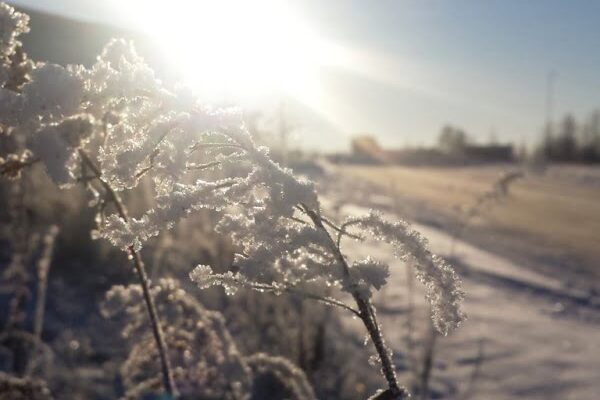
The effect of frost on plants depends on both the plant and the circumstances. The sudden arrival of severe cold has scared gardeners worried about their plants. The survival of plants during frosts often depends not only on the external temperature, but also on other conditions, sometimes even more important.
WHAT DETERMINES THE NATURE OF THE PLANT
First of all, for some plants the Lithuanian winter is normal, for others it represents a challenge. If you know the specific variety of the plant, you can already draw some conclusions. Find your plant in plant catalogs or just online and see what it says resistance zone (in English you will find «hardiness zone»):
- Plants of zone 4 and lower grow well in eastern Lithuania,
- zone 5 plants should survive in central Lithuania,
- on the coast perhaps zone 6 plants will survive the winter uncovered.
Meteorological services say that in Lithuania there are much higher zones (zone 5 in the east, even higher in the west), but if you want resistant plants, always look for the lowest possible number.
The exception is the umbrella. In the cozy courtyard of the old city, where there is no wind, more lush plants will successfully winter than they should according to the hardiness zone. And vice versa: in a country house on a hill, where strong winds graze, choose plants even more resistant than the recommendations indicate.
Read more What is a soundscape and how to apply it to your garden
WHERE TO FIND A ZONE OF RESILIENCE
You can consult the catalogs online, for example here.
Seedlings brought from abroad may have a label on which the hardiness zone is written.
Please pay attention to the specific variety when checking, as different varieties of the same plant may belong to different areas. For example, various varieties of light hydrangeas (Hydrangea arborescens) and panicle hydrangeas (H. Paniculata) can be grown throughout Lithuania (zone 4), while varieties of large-leaved hydrangea (H. Macrophylla) are classified in zones 5 and above. Therefore, to grow them in the Vilnius region, you will need special care in winter to survive the winter.
 The tastiest tomato varieties of 2019: my greenhouse harvest
WHY PLANTS FREEZE
Resistance zones are determined using various criteria. The most obvious criterion is the lowest outdoor temperature the plant can tolerate. This is understandable to everyone.
However, it is interesting to note that plants that tolerate extremely low temperatures also have another feature: they are accustomed to a long winter. This means that the plant needs a rather long winter cycle during which it «sleeps». For example, an apple tree: loses its leaves in autumn, rests in winter and blooms in spring. Severe frosts affect the apple relatively little.
The difference with more lush plants with a higher hardiness zone is that they come from warmer countries, where the winter is not so deep, not so long. There is a threat to these plants beyond the threat of simply being physically frozen waking up at the wrong time. If the plants felt «spring» and the leaves began to burst, and then hard frosts occurred, the fresh leaves and the entire branch could freeze. Therefore, sometimes it is not the cold that is most dangerous for them, but the more pronounced warming during the winter.
Meanwhile, the apple tree (or any other local plant) seems to be in hibernation for a long time, no weekly warming of January or February affects it, it does not start to wake up earlier and calmly waits for spring.
Read more A beautiful plot in winter: practical advice on how to make it.
THE EFFECT OF FROST ON PLANTS IN LACK OF HUMIDITY
When we notice the brown side of the thuja in spring, we say that the thuja has frozen. However, in reality, it is not the result of cold, but of drying, dehydration, as it is otherwise called physiological drought.
How it happens: Frost is usually caused by an anticyclone – this means there is no cloud cover, no precipitation, the sun is shining. Due to the influence of the sun, further strengthened by reflective snow, the aboveground part of the plant heats up and evaporates moisture. However, there is no way to replenish the evaporated moisture: the roots of the plant are tied by severe frost and it cannot get nutrients and water from them. The loss of moisture causes the ends to dry out and turn brown.
What to do? Cover creeping plants that have thorns or leaves on the south side.
All plants that do not lose their needles or leaves in winter evaporate more moisture than those that lose their leaves and retain only bare branches. Therefore, those with leaves or needles are most at risk of drying out in winter: these are rhododendrons, boxwoods, some thujas, yews and others. Also at risk are those plants that germinated last year and will flower the following year, for example magnolias, some roses, large-flowered hydrangeas, rhododendrons.
Read more Tomatoes that do not need pruning: all about them
Let’s go back to the idea that midwinter is normal and that the effects of frost on plants are normal. During the cold of early January the sun is not yet high and not very active. The greatest damage to plants occurs when frost comes as spring approaches, because the sun is high and the effect is much greater.
HOW TO HELP PLANTS
- Water from autumn. In order for the plants to be ready for frost and baking in the sun, they must be saturated with moisture. If autumn is dry, water sparingly. If autumn is rainy, be happy that nature did the work for you.
- Cover the plants with snow. It is better when nature does its best: it lays down a thick bed of snow and only then freezes everything in a flash. The more it snows, the more stable the temperature is kept under it. This is the best helper for plants.
- If you can guess before frost, cover leafy plants with fir branches or mulch with compost, cover with garden soil. If frost has already arrived, the fir branches will not be of much use except to provide shade.
- If frost has arrived at the end of winter, place a southern sun awning for more thriving plants.
- Extremely delicate plants that are classified in a higher zone than the current one will have to create heating. To do this, some use agricultural films, others make tunnels with air gaps, others purchase ready-made fabrics for covering. How to cover roses for the winter, read here.
If you have potted plants, bring them inside (garage, basement, porch) during hard frosts where the temperature is not so drastically low. The effect of frost on potted plants is significantly greater. Additionally, the vessels themselves can split.
latest posts published

how to recognize the problem and how to save your lawn

Growing Peas for Beginners: Here’s What You Need to Know
3 ways to clean the gaps between pebbles – without chemicals!

Collecting sprouts: the most common mistakes
my review on the greenhouse harvest –
Which plants and how to cover the garden at the end of winter?

Take care of the graves in autumn, so that they are beautiful even in spring

what you will find in Lithuania if you decide to try it
English style: how to create one in Lithuania