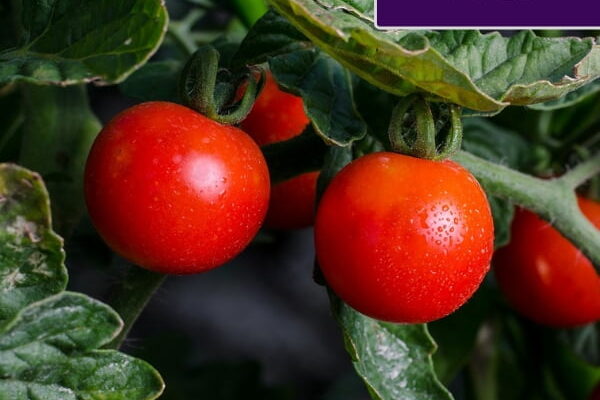
Tomatoes that do not need pruning – a golden phrase for all novice tomato growers. After all, pinching axillary shoots, tearing leaves or otherwise limiting them seems like a hassle. Also, you need to know how to do it right. In this video you will learn that some tomatoes grow like vines, while others grow like bushes, and it depends on whether you need to prune them:
In this article, I detail what determinate tomatoes are, what indeterminate tomatoes are, how they differ, and how to distinguish which ones do not need to be pruned.
Two groups of tomatoes

Let’s start from the fact that there are two types of tomatoes, depending on how they grow:
Read more Greenhouse in spring or how to prepare a greenhouse after winter
- Indeterminate.
- Indeterminate Determinants.
Indeterminate tomatoes
Indeterminate tomatoes are the most common tomatoes we grow in greenhouses and it is necessary to tie them up, otherwise they will not hold their weight. A tomato is basically a vine, a climbing plant. I know it sounds strange, but it’s true.
The tomato grows upward by coiling, constantly releasing lateral branches. Those twigs take on a life of their own and can continue to curl up like full-fledged plants. And so the story goes on and on: the tomato would grow, shrivel, and send branches to the sides uncontrollably, if only it weren’t in trouble.
Problems in growing tomatoes in Lithuania, leading to the end of the tomato season:
- Autumn and winter are coming (here at best),
- Diseases occur (most often here).
Because our season is limited, tomatoes cannot reach their full potential and we need to help them. If we let all the branches grow, the tomato would not be able to produce a crop on all of them. Then by pinching the axillary shoots, we slow down the growth of the plant to obtain the maximum yield from each seedling.
Read more How to plant a terrace, especially when part of the plants are in the shade
I also showed in detail how to prune indeterminate tomatoes I described it here.
The determinants are tomatoes that do not need to be pruned
The determinate tomato does not grow like a vine, but more like a small bush. It reaches its full size: it will grow to the height it is supposed to reach, and then it will stop: blooms will show, fruit will develop, and then the plant will die. Thus, the life span of such a tomato is much clearer and easier. We may not enjoy as long a harvest as with indeterminate tomatoes, but it can still be abundant – it relies on the type and the care you provide.
You have already realized that with a determinate tomato, there are as many blooms as there are fruits. If you cut the branch, you remove the chance of a tomato. So it is not necessary to trim, strip or pinch them: these are the tomatoes that do not require trimming.
It is true, there are occasions when it can be useful to do a bit of upkeep: I typically take off the leaves that touch the ground to stop them from decaying. You can also pinch another leaf so that the remaining tomatoes get more sunlight. But that’s just for cleanliness. Overall, we grow the determinate tomatoes just as they are.
Read more A beautiful greenhouse not only for growing tomatoes, an example from the Kaunas region
How to distinguish?
Unfortunately, however, very often it is not written on the package what type of tomato it is, and you have to understand from the clues. If it is written that the variety is dwarf, e.g. ‘Vilma’, ‘Bajaja’ – this means that such a tomato has limited growth, will be determinant.
Tomatoes that do not require pruning: here are some crucial varieties:
‘Vilma’ (round small red, hard)
‘Venus’ (yellow cherry tomatoes)
Read more Online landscaping courses: we present the programs
‘Bajaja’ (small red, with acidity)
‘Magnus H’ (medium, red tomatoes)
‘Promyk’ (medium sized red tomatoes)
If nothing is written on the package about the height of the tomato, it is most likely an indeterminate tomato. How to care for and grow them, read in my other articles: about growing tomatoes, varieties, pruning tomatoes and further care of the greenhouse – it’s all here.
Conlusion
The idea of tomatoes that do not require pruning sounds like a dream for beginner gardeners. For many, removing side shoots, trimming leaves, and managing plant growth can feel confusing and time-consuming. However, understanding the fundamental difference between tomato types makes everything much simpler. Not all tomatoes grow the same way, and knowing whether your plant is determinate or indeterminate determines how much maintenance it truly needs.
Determinate tomatoes grow more like compact bushes. They reach a certain height, set fruit over a shorter period, and usually do not require extensive pruning. For novice growers, these varieties are often the easiest option because they demand less shaping and supervision. On the other hand, indeterminate tomatoes grow like vines. They continue to grow and produce fruit throughout the season, often requiring staking, tying, and selective pruning to maintain airflow and support fruit development.
Pruning itself is not about restricting the plant unnecessarily; it is about guiding growth, improving light exposure, and encouraging healthier fruit production. When done correctly, removing excessive suckers can prevent overcrowding and reduce the risk of disease. However, over-pruning or applying the same method to all tomato types can harm the plant rather than help it.
Ultimately, successful tomato growing begins with understanding your variety. By identifying whether your tomatoes grow as vines or bushes, you can adjust your care routine accordingly and avoid unnecessary work. For beginners especially, choosing the right type simplifies the process and builds confidence. With the right knowledge, tomato cultivation becomes less of a chore and more of an enjoyable and rewarding gardening experience.
latest posts published

how to recognize the problem and how to save your lawn
Growing Peas for Beginners: Here’s What You Need to Know
3 ways to clean the gaps between pebbles – without chemicals!
Collecting sprouts: the most common mistakes
my review on the greenhouse harvest –
Which plants and how to cover the garden at the end of winter?

Take care of the graves in autumn, so that they are beautiful even in spring

what you will find in Lithuania if you decide to try it

English style: how to create one in Lithuania