Growing broccoli isn’t very difficult, so it’s worth a try even if you’ve never grown cabbage before. How to do it, from seed selection to harvesting, has been told in detail Egle Mikolaitytė from the family farm Sofa growers:
Broccoli cultivation and its entire process are described below in detail:
- What varieties of broccoli to choose for large heads;
- When to sow broccoli both for early harvesting and for winter storage;
- How and in which substrate to sow;
- When to transplant seedlings into the field;
- How to fight parasites if you don’t want to use chemicals;
- A simple trick to eliminate parasites after harvesting.
GROWING BROCCOLI – HOW TO CHOOSE THE BEST VARIETY
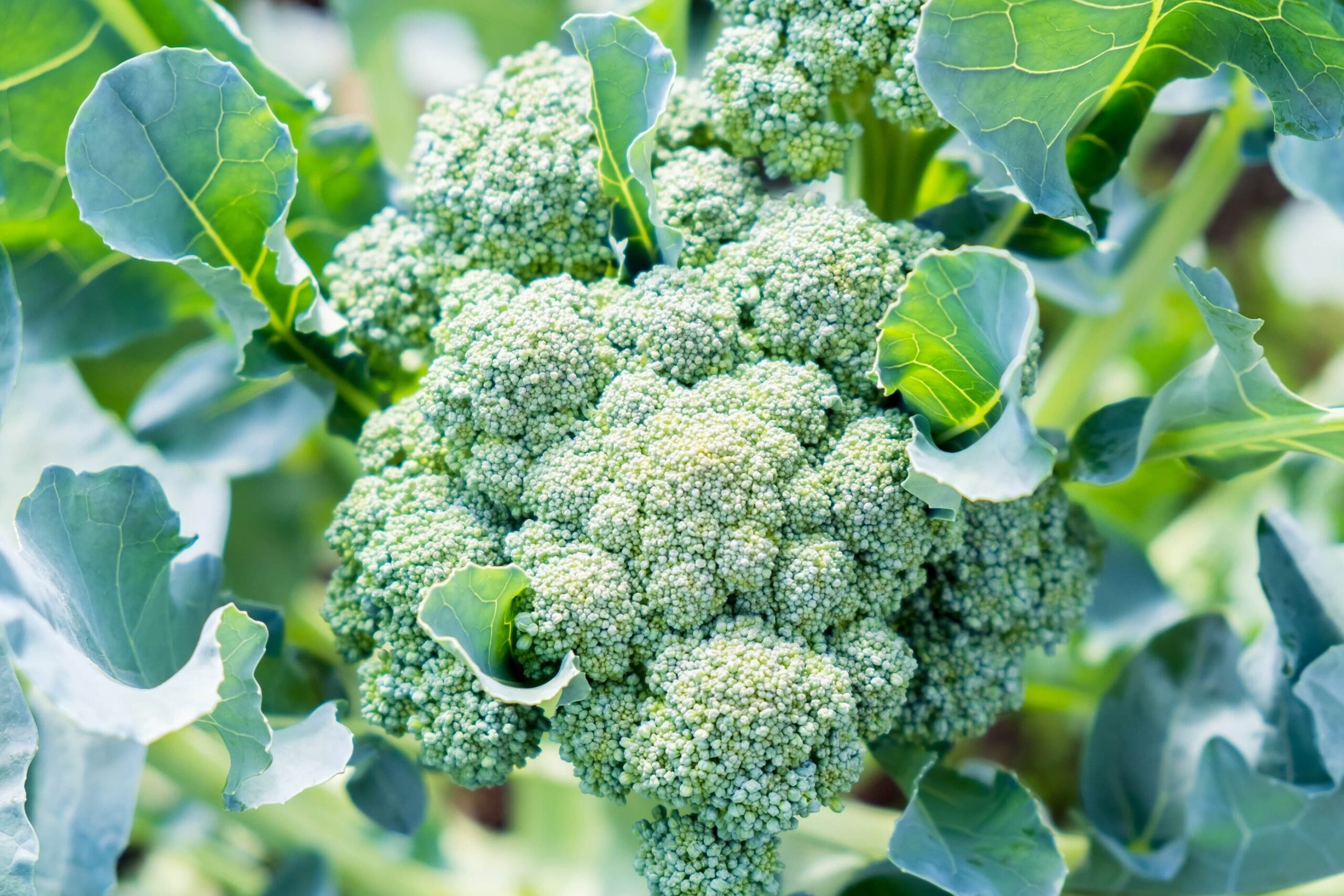
People usually ask what to do to make broccoli heads as big as possible, because it is not always possible to grow them. Eglė Mikolaitytė says there are no secrets here: the size of the head depends on the breed. Therefore, pay attention to the picture on the seed package and the description of the variety.
Read more Nurseries in Poland and «Green is life 2024» exhibition: my impressions
Spruce says broccoli varieties can be divided into three main groups:
- Those characterized by large inflorescences (heads) and a large stem (usually only the inflorescences are eaten). Here, in Lithuania, they are the most appreciated and most often grown;
- Variety with smaller flowers, but also with rather large stems. Even just the inflorescences are collected and consumed;
- Variety with small flowers and long stems. All parts are edible: stems, leaves and flowers.
We could place Chinese broccoli or Chinese cabbage in the third category Gailan (Brassica oleracea var. alboglabra), which have tall stems, many leaves and small flowers. All of these parts can be eaten. This category also contains the so-called broccolini which are mixtures of broccoli and Chinese broccoli. They have a much softer taste than big-flowered broccoli, and the florets are enjoyed with the long, slender stems.
The most tasty for me personally is broccolini. I haven’t planted them yet, this will be a great chance to search for seeds this year and give them a try.
In the meantime, the selection of seeds for large-flowered broccoli types is really broad. The type that worked best for Egle Mikolaityte is a hybrid called «Luck H». But the gardener says that a good yield can be achieved from all professional quality and officially sold seeds.
Read more Landscape trends for 2017 – Geltonas Karutis
In order for the result to be truly guaranteed, the seeds must be germinated correctly: the shoots must be strong and firm. Now let’s talk in detail about planting and germination.
WHEN TO SOW TO GET THE HARVEST AS SOON AS POSSIBLE
Broccoli can be sown since April (from around day 10).
But it can be done later. The right planting time can ensure both an early harvest of broccoli and a harvest for the winter. In other words, harvest broccoli from July to October.
How to distribute the sowing:
Read more The flowering festivals in spring 2018 and the calendar of seedling fairs
- We sow early varieties in April so that we can get the first harvest in July or early August;
- We can repeat sowing every 10-14 days. We choose later varieties. It is important to calculate that we plant the last seedlings in the ground in mid-July. This way we will have a harvest for the winter in October.
Although in our country broccoli is often imagined as summer vegetables, the specialist says that autumn broccoli is of higher quality and stronger than summer broccoli. This is because broccoli likes a cool, relatively humid climate.
HOW TO SOW BROCCOLI
- Choose the light for planting universal substrate for vegetables. It is very important that the earth is not compressed, not hard. You can supplement the substrate vermiculite granules – they maintain the correct balance of moisture in the soil, protect the seedlings from excessive drying;
- Sow one seed at a time in a separate member of the nursery. Like other cruciferous vegetables, broccoli roots are quite large. Therefore it is better to sow one seed at a time: this way the roots will have enough space to develop. Furthermore, there will be less risk of damaging them when transplanting the seedlings into the ground.
GROWING SEEDLINGS IN A GREENHOUSE
Growing broccoli from seeds is really quite simple as the seeds germinate easily and grow quickly. But, kept too warm and too bright, the seedlings are very prone to stretching.
Therefore Eglì recommends keeping nurseries with seeds in a greenhouse where the ambient temperature is around 18-20 °C. When the seedlings germinate, the temperature can be slightly reduced – the seedlings will become stronger and more stable. The stronger the seedling we grow, the more likely we are to have good, high-quality broccoli.
Grow the seedlings until they have 3-4 true leaves: they are ready to travel into the open ground.
Read more from grandmother’s garden to the most fashionable gardens
WHEN TO TRANSPLANT INTO THE GROUND
Transplant the seedlings into the soil in the month of Maywhen the soil is moist, not dry, and it is still quite cool outside. Unlike basilisks ar fennel (I recently wrote about their cultivation), for whose seedlings spring frosts can be devastating, for broccoli they are not so dangerous – they can even tolerate the cold of 7 °C. Nothing to worry about, even in the event of an unexpected spring snowfall, as happened to the spruce broccoli sprouts.
HOW TO PROTECT YOURSELF FROM PARASITES WITHOUT USING CHEMICALS
You can use chemical preparations, but if you want to avoid them, try the method suggested by Eglì:
- If you intend to grow broccoli in an entire flowerbed or even in a few, do as Eglì does: when the broccoli leaves are already large and the flowers have just begun to intertwine, cover the entire flowerbed with a thin agricultural film;
- If you grow just one more broccoli, you can purchase special covers at garden and vegetable stores or use agrofilm.
If covered in this way, cabbage whiteflies (butterflies) will not be able to lay their eggs on the broccoli leaves, which will then hatch giving birth to caterpillars that gnaw on our vegetables.
TRICK TO ELIMINATE PARASITES AFTER HARVESTING BROCCOLI
If it so happened that you did not have time to cover broccoli during cultivation, you can get rid of pests after harvesting:
- After cutting the broccoli head, soak it in salted water. If there are any worms on the vegetable, they will be washed away and the broccoli will be safe to eat.
Cauliflower can also be cleaned of parasites in this way.
Thanks to Egle Mikolaityte for the detailed presentation and advice. I am sure that from now on growing broccoli will not scare you and you will try to grow it yourself. You can find Eglė and his family’s farm «Sofos farmankaii». Facebook AND Instagram in social networks.
latest posts published

how to recognize the problem and how to save your lawn
Growing Peas for Beginners: Here’s What You Need to Know
3 ways to clean the gaps between pebbles – without chemicals!
Collecting sprouts: the most common mistakes
my review on the greenhouse harvest –
Which plants and how to cover the garden at the end of winter?

Take care of the graves in autumn, so that they are beautiful even in spring
what you will find in Lithuania if you decide to try it
English style: how to create one in Lithuania