

Roses, creepers, fountains and low box hedges— English style it fascinates many with its mystery, abundance of plants and at the same time with its tranquility. The ancient traditions change little by little, the style is modernized, but you can identify some typical things of the English garden, which will also add charm to your garden.
WHAT IS AN ENGLISH GARDEN WITHOUT ROSES
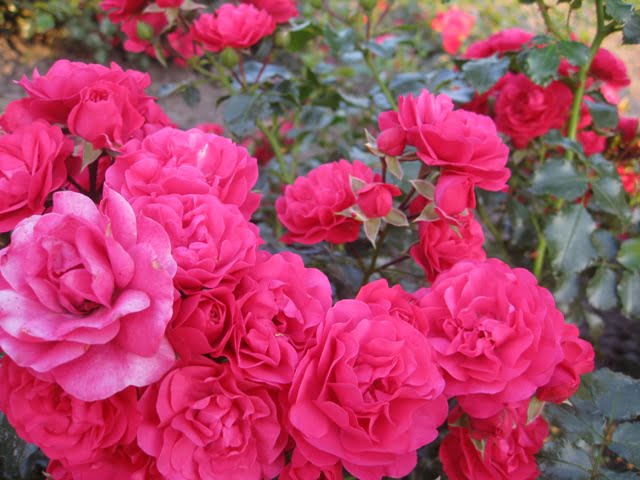
Rose it is one of the essential elements in a typical English courtyard. Climbing roses wrapped around arches or trellises are perfect. However, if you live in the eastern part of Lithuania and it is difficult to grow climbing roses there, choose other roses. No doubt large bushes of fragrant old roses will also add their charm.
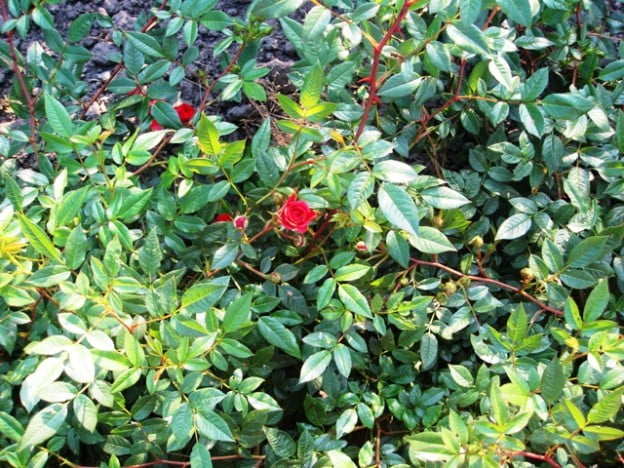
Roses do not have to be solitary queens, they are also suitable for the company of perennials. Grow nearby rasakilos – a classic combination with roses. However, biennials are upright Rusmenemore familiar to us from our grandmothers’ kindergarten, it is also suitable among roses. Contrasting their verticality with the round rose buds, daisies liven up the look and become those fun accents in the flower garden.
Read more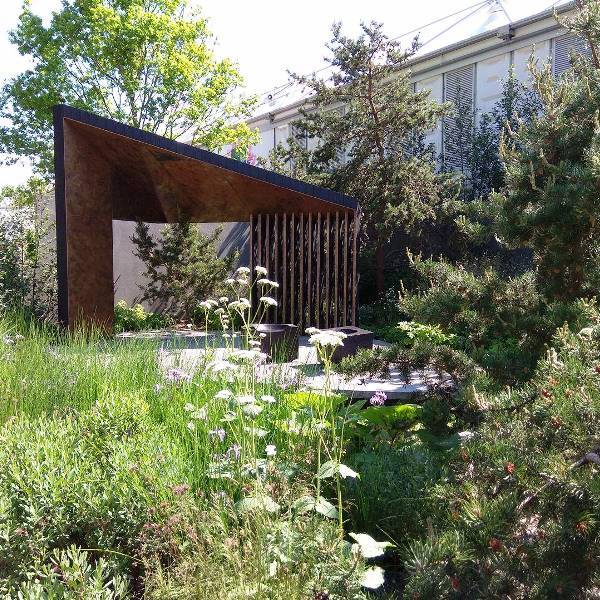 Chelsea Flower Show 2017 surprises with sculptures
EXPRESSIVE FORMS OF BUSHES
Another way to add charm to an English garden is through plant training. Long growth boxwoodconstantly pruned, they grow into a beautiful dense tuber: the larger and denser they are, the more beautifully they blend into the overall picture. Box trees do not lose their leaves even in winter. They also grow well in Lithuania, just choose a shady place and be patient. Maybe that’s why boxwoods were common in monasteries: apparently the monks really have patience. Diversify round-shaped boxwoods with rhododendrons, perennial flowers.
Typical of the English style hedges. There are many examples where a representative courtyard at the entrance to the house is made exclusively with low hedges. You return home tired, bleary-eyed and the most intricate hedgerow patterns wind across your path. It’s so English! Just don’t spoil everything with colored mulch, it is absolutely not appropriate here.
Stability and resistance are provided not only by the hedges, but also by the individual shaped plants in clear expressive forms: cone, pyramid or spiral. In Lithuania, there are many examples where plants of a figurative shape are located in the wrong place, unrelated to other nearby objects, to the context of the entire plot. Use other small architectural elements to emphasize formality. If the garden has elegant shapes, place a simple concrete birdbath in the center as an accent. If the garden is elongated, plant pyramid-shaped trees near the main entrance to give a more formal look.
FLOWERING BUSHES AND PERENNIAL FLOWERS
Shrubs are a natural part of the English garden, they help create welcoming spaces, divide the garden at different heights and make the garden more interesting. Shrubs are very useful and expressive, whether it’s a cluster of hydrangeas in the center of a perennial or a thick row of hedges framing a holiday lawn. Perennial flowers and flowering shrubs typical of the English garden:
Read more the traditional flower garden played the role of a social network
- Phlox
- Hydrangea
- Monarda
- Lupine
- Veronica
Annuals are a great addition to perennials as long as they fill the void, but don’t let them grow too large. Here are some popular choices:
- Kindergarten orphan
- Cosmeia
- Sowing
Nothing is impossible in Lithuania, right? It is important not to reduce it, the plants must be abundant, not too small, but enveloping and lush.
How to match so many different plants, so that the image is not chaotic, but aesthetic, it is necessary to know some important principles of plant design. Plant traditions are very old and deep in Britain, but even now gardening courses are popular there. In Lithuania you can also learn to create beautiful plant combinations: for example, «Modern Flower Garden» courses teach the principles of plant design, and participants create their own flower garden designs.
THE ENGLISH GARDEN AND THE EDIBLE PLANTS IN IT
Herbs and vegetables are an important part of the English garden, adding variety in color and providing benefits. You can set aside a special space just for vegetables, herbs, or fruits, or you can arrange them in flowerbeds along the path. Vegetables in the flower garden can often be spotted in designs by well-known garden creators, especially those made for plant shows. However, consider carefully which vegetables will work in the flower garden because of their growing seasons. For instance, heads of cabbage or lettuce can look nice in a flower garden, but in spring, you will only see young plants, and after harvest, there will be bare spots. Herbs tend to do better in a flower garden. For example, basil with green or purple leaves has upright flowers that attract bees.
Read more Macramé for plants: 7 ideas for indoor plants
And we are not only referring to herbs, in the English sense – particularly fragrant herbs, whether for cooking, fragrances, or medicinal uses. Mint, for instance, which has only one other type commonly found in Lithuania, is cultivated in Britain in many different kinds, ranging from apple mint to lemon mint.
ENGLISH LAWN AND BENDS OF THE PATH
The size of the lawn in your English garden depends on how much time you can dedicate to cutting the grass and the use you will make of it. You really can’t go wrong here.
Furthermore, in modern English gardens there may be no lawn at all. Instead, the seating area is based on tiles, slabs of wood or stone, and the hard surfaces are counterbalanced by large, expressive plants. There such a solution is natural, because in spring it is difficult to walk on the dilapidated lawn due to the humid climate. On the other hand, abandoning the lawn significantly reduces work and costs, and with the help of large expressive plants, the overall aesthetic image does not suffer at all.
Gently curved and sinuous gravel tracks It has a rustic charm and gives the impression of movement, which is one of the main characteristics of the English garden. Geometric shapes of flower and herb bedslike squares and rectangles, they create orderly spaces in a free environment. There is usually a wooden bench placed along or at the end of the path, usually in front of a small pond or fountain. Large flower pots or statues are usually placed next to the track as decorations.
Read more Spring pruning: what to prune now and where to take the time
In Lithuania, the English style, or at least a similar type of garden, is also possible. To create one in your space, try combining free, winding lines of paths, abundant and lush flowering areas, check out the abundance of light geometric shapes with frame plants, and don’t forget about cute English details: a fountain, a bird feeder or a clay pot with flowers.
latest posts published

how to recognize the problem and how to save your lawn
Growing Peas for Beginners: Here’s What You Need to Know
3 ways to clean the gaps between pebbles – without chemicals!
Collecting sprouts: the most common mistakes
my review on the greenhouse harvest –

Which plants and how to cover the garden at the end of winter?

Take care of the graves in autumn, so that they are beautiful even in spring

what you will find in Lithuania if you decide to try it
English style: how to create one in Lithuania