Elderberry is currently thriving all around us, its delicate white flowers gracing gardens and wild spaces alike. Yet, despite their abundance, few people recognize the potential hidden in these blossoms, particularly when it comes to traditional home remedies. These tiny flowers hold the key to creating a soothing ointment that works wonders on burns, insect bites, and minor wounds. Crafting this all-natural remedy is simpler than you might think, and the process itself offers a rewarding touch of creativity. The fresh, floral scent of elderflowers adds an extra layer of charm, making it a delightful DIY project to try. In this post, we’ll guide you through the steps to collect elderflowers at their peak in June and walk you through the process of preparing a healing ointment—an essential addition to any natural first-aid kit.
Ingredients for elderflower oil extract
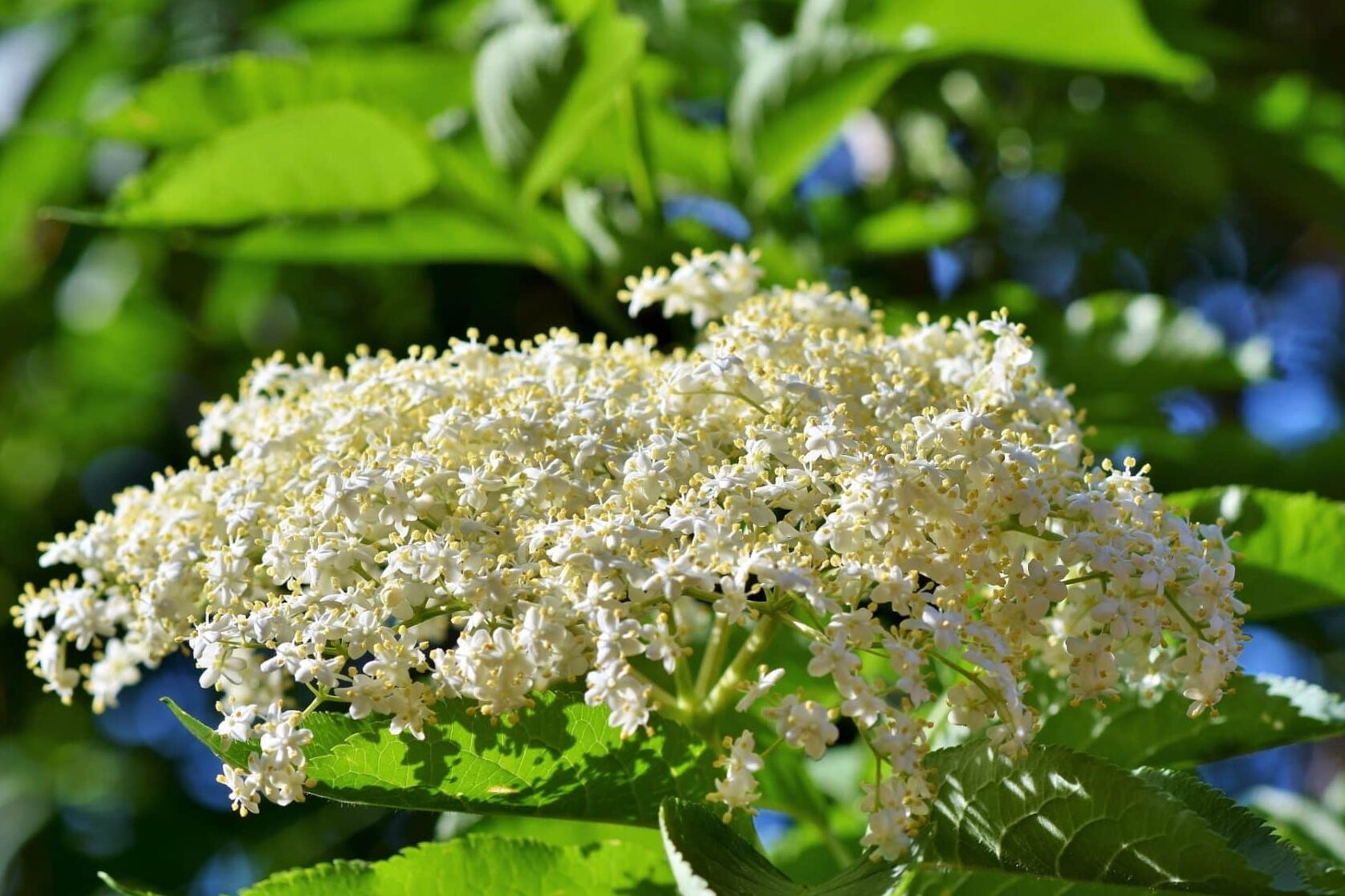
For elderflower oil extract you will need:
- 4-5 elderflower umbels
- 50 g of olive oil
- 50 g of argan oil
You can also use another oil of your choice for the oil extract. Olive oil and argan oil are great if you want to hydrate your skin. If you smell yourself olive oil If you don’t like it much, you can also use more odorless oils, such as almond oil. For the oily extract, only the flowers are used and not the green parts of the plant. Place the flowers in a clean screw-top jar or glass bottle, pour the oil over all the flowers and leave them in a warm, sunny place for about three weeks. The container is not closed with a lid, but only with a cloth that can be secured with a clamp or rubber ring. You should shake the oily extract lightly every two days.
Read more Now fertilize the tomatoes with wild herbs
Inspirations for the summer
Do you already know our magazine Kräuterkeller? In our summer edition of Kräuterkeller magazine (available here) you will find lots of information and inspiration on the world of wild herbs in summer. You will receive the Kräuterkeller magazine in a digital PDF version but also in a printed version. In our herbalist’s shop you can also find our book»With wild herbs and medicinal plants all year round“(available here). In it we show you the most important local wild herbs, when to harvest them and how to use them. It offers you the ideal introduction to the world of wild herbs and healing plants
Instructions for elderflower ointment
To prepare the ointment you can use homemade elderflower oil. After about three weeks, strain the parts of the plant and prepare an ointment with the following ingredients.
- 75 g elderflower oil
- 25 g of shea butter
- 12 g beeswax (e.g here at Beegut)
- 5 drops of vitamin E
Elderflower oil is placed in a glass jar in a water bath heated on the stove. Add the beeswax and shea butter and stir until everything is combined and melted. Finally, if you want, add 5 drops of vitamin E, which you can buy in liquid form. This extends the shelf life of the ointment. Subsequently, the ointment is filled into clean jars, left to cool and the jars closed only when the ointment has completely cooled so that no condensation forms. Stored in a cool, dark place, vitamin E ointment will last at least a year.
Beeswax discount code
If you don’t have beeswax at home or don’t know a local beekeeper, you can use this Discount code Herb cellar10 10% discount on your order beegut save. Here you are at the shop. Advertising
Read more Short-cooked pumpkin soup with ginger, turmeric and herbs
How do you use elderflower ointment or oil?
Elderflowers are prized for their anti-inflammatory properties. If you have small abrasions or very rough hands that are already chapping, elderflower ointment is a relief. If you get bitten by flies or other insects in the summer, the ointment can relieve the itching and help the skin calm down more quickly. Especially if you use shea butter. The ointment and oil are also suitable after excessive exposure to the sun. If you have suffered a light sunburn, you can subsequently care for your skin with elderflower oil or ointment. The ointment provides moisture and can help the skin regenerate faster.
Learn about and process local wild plants
Elderberry is an important wild plant that can be used in early summer (flowers) and late summer (berries). We live as naturally as possible, use many wild plants or medicinal herbs in our diet and in our medicine cabinet and would like to pass on our experience to you. You can make your own ointments from many medicinal plants. We would like to pass on this knowledge. If you want more tips like these or want to know why wild herbs and medicinal plants are so precious to us, take a look at our little herb witches online shop Above. There you will find our book for a perfect introduction to collecting wild herbs and medicinal plants”With wild herbs and medicinal plants all year round“(available here). Here we have photographed many native plants in over 160 pages and present them in detail. For each plant there are tips for using it in the medicine cabinet and witch’s kitchen.
Due to the high demand for books from us, we have decided to fulfill this request. There are now three books, a children’s discovery book, a seasonal wild herb calendar and also a herb cellar magazine.
Read more Are tulips poisonous? Be careful: confusion with onions
latest posts published

how to recognize the problem and how to save your lawn
Growing Peas for Beginners: Here’s What You Need to Know
3 ways to clean the gaps between pebbles – without chemicals!
Collecting sprouts: the most common mistakes
my review on the greenhouse harvest –
Which plants and how to cover the garden at the end of winter?

Take care of the graves in autumn, so that they are beautiful even in spring

what you will find in Lithuania if you decide to try it
English style: how to create one in Lithuania