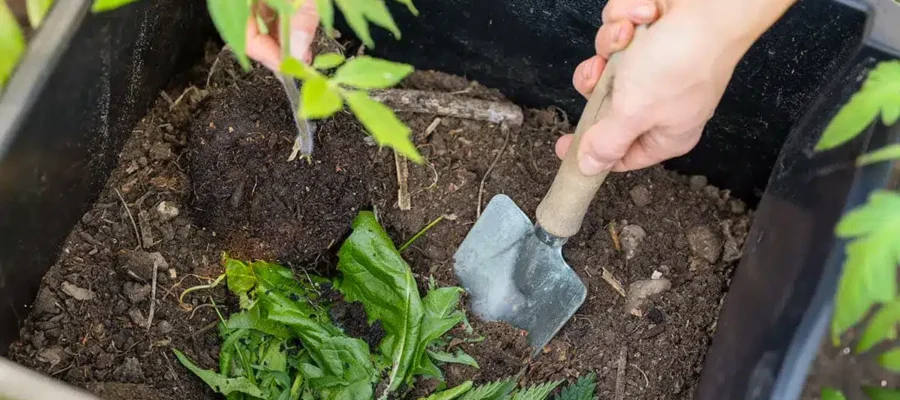
Tomatoes require proper nourishment, but there‘s no need to invest in costly fertilizers. During June, nature provides everything your plants need to thrive. Wild herbs like nettle, comfrey, or groundwort are rich in the exact nutrients essential for tomato flowering, growth, and a bountiful harvest. With these ingredients, you can create a homemade liquid fertilizer that’s entirely natural, cost-free, and often more effective than traditional commercial options. Follow our simple, chemical-free guide to prepare it step by step.
Why use wild herbs as fertilizer?

Wild herbs are true wonders of nature. Not only are they hardy and adaptable, but they also contain a number of nutrients that make them an excellent natural fertilizer. By introducing wild herbs into your garden soil, you can improve soil structure and increase the nutrient supply to your tomato plants.
Which wild herbs are best?
- Nettle: Rich in nitrogen, it is ideal for the leaf growth of your tomatoes.
- Good: Known for its high potassium content, it promotes fruit formation and improves the taste of tomatoes.
- Dandelion: An all-rounder that provides many important minerals and increases soil fertility and is also rich in potassium.
Inspiration for the garden and kitchen
With our self-created wild herb magazine, you can experience the world of wild herbs and medicinal plants in a new way every season. You can find interesting reports, delicious recipes and easy-to-implement inspirations such as ointments and creams in our Magazine of the Cantina delle Erbe (available here). Don’t own any of our paper magazines yet? So secure the set with all editions still available. Available in our shop at
Read more Short-cooked pumpkin soup with ginger, turmeric and herbs
Step by Step Instructions: How to Use Wild Herbs as Fertilizer
If you want to plant tomatoes, you must first add some collected wild herbs to the plant. First you look for wild herbs in the garden or in the great outdoors. It is recommended to place the nettle at the bottom of the planting hole. You can put a few dandelion or comfrey leaves on top. Then put a little soil on top and then put the tomato plant in the garden plant, shovel the hole again and water. If tomato plants initially lose their leaves, this is not a problem. They recover again.
Discover wild herbs in your garden
«With wild herbs and medicinal plants all year round“(available here) is the ideal book to introduce you to local medicinal and spontaneous herbs. For each season we have represented the most important local herbs, which can be identified relatively clearly and which are available in such large quantities that they can be found in nature. Although many guidebooks contain an extremely large number of plants, most of them cannot be found on a herbal hike. We have tried to create a guide that can really help you and that, in addition to the important features, also shows how to use it in the kitchen and in the medicine cabinet. The book and all our other products, such as the seasonal wild herb calendar, are only available in our Herb Witches online store
Regular fertilization with wild herb manure
Nettle and comfrey manure is a natural and effective fertilizer especially for tomatoes. They provide plants with important nutrients such as potassium, nitrogen and silica, which promote growth and make plants more resistant to pests and diseases.
Nettle manure It strengthens the cell walls of tomatoes, which means they are better protected from aphid and fungal attacks. Furthermore, it can improve the taste of tomatoes.
Read more Are tulips poisonous? Be careful: confusion with onions
Comfrey manure it is particularly rich in potassium and promotes fruit formation and the quality of tomatoes
Reading tip: our very special book on nettles
You can find many more great nettle recipes and tips in our nettle book “Nettle – queen of wild plants“(available here). In this book we present nettle in a way that you can’t even see it with the naked eye. Along with lots of information and stories, you will find unique macro photos – you have certainly never seen a nettle like this before. The book is in our herbalist’s shop available. You can also find the handmade one there Brennnesselschwamm.
Manure application
- Both manures must be diluted after preparation and fermentation (ratio 1:10, manure and water).
- Fertilizing tomato plants: ideally every two weeks with this diluted solution, starting immediately after planting until the end of fruit formation.
Advantages of fertilizing with wild herbs
- Environmentally friendly: You don’t need to buy chemical fertilizers and you can collect organic material right outside your door.
- Convenient: Wild herbs grow free in the area.
- Health promotion: Promotes tomato health and produces fresh, chemical-free vegetables.
Conclusion
Tomatoes are nutrient-demanding plants, especially during their flowering and fruiting periods. However, their nutritional needs can be met without expensive chemical fertilizers. In June, a plethora of nutrient-rich wild herbs flourish, which can be used to create highly effective homemade fertilizers. Gardeners can utilize plants like nettles, comfrey, or cinquefoil to provide essential minerals and micronutrients, promoting vigorous growth and a bountiful harvest, instead of purchasing synthetic fertilizers.
These wild plants are particularly valuable because they are rich in nitrogen, potassium, and other micronutrients crucial for tomato growth. Nettles promote vigorous foliage growth, while comfrey is rich in potassium, which aids in flowering and fruiting. Fermenting these herbs into a liquid fertilizer makes it easier for plants to absorb the nutrients. The resulting concentrated organic fertilizer improves soil fertility and enhances plant resilience.
Read more Super free fertilizer made from nettle, so your vegetables will grow like crazy in September
One of the main advantages of this method is its sustainability. Using local wild herbs reduces waste, avoids packaging and chemical residues, and promotes soil health by stimulating beneficial microorganisms rather than disrupting the natural balance. Regular application of homemade liquid fertilizer can improve soil structure and fertility over time, resulting in healthier plants and higher yields.
The method for making the fertilizer is simple: gather fresh herbs, chop them, soak them in water, let the mixture ferment for a few days, then dilute and apply. While this process may produce a strong odor, the results are often amazing. Tomatoes fertilized with this natural liquid fertilizer typically have more vibrant leaves, stronger stems, and larger fruits.
Ultimately, fertilizing tomatoes with wild herbal fertilizer demonstrates that successful gardening doesn’t depend on expensive products. By respecting the seasons and utilizing nature’s bounty, gardeners can cultivate beautiful plants in a chemical-free and cost-effective way. This approach not only promotes a bountiful tomato harvest but also strengthens the connection between the garden, the soil, and the natural cycle.
Read more Prepare the toasted almonds yourself, with or without the Thermomix
latest posts published

how to recognize the problem and how to save your lawn
Growing Peas for Beginners: Here’s What You Need to Know
3 ways to clean the gaps between pebbles – without chemicals!
Collecting sprouts: the most common mistakes
my review on the greenhouse harvest –

Which plants and how to cover the garden at the end of winter?

Take care of the graves in autumn, so that they are beautiful even in spring

what you will find in Lithuania if you decide to try it
English style: how to create one in Lithuania