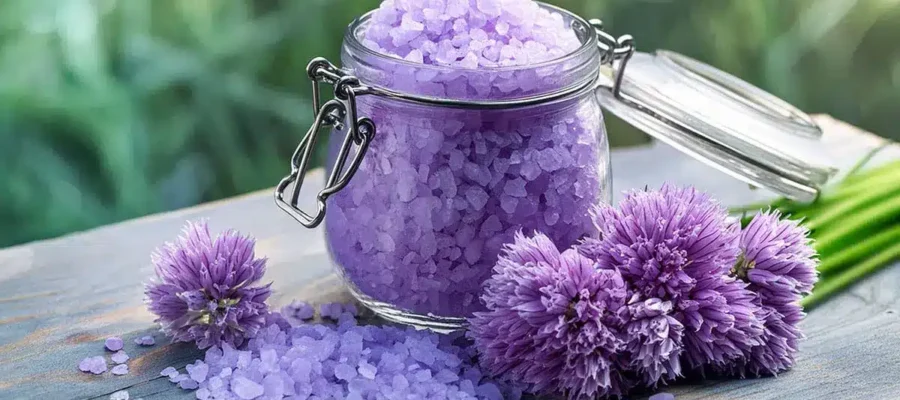
The delicate purple flowers of the chives only shine for a short time – and already in June you can use them to prepare a very special floral salt. Not only does it look beautiful, but it also gives your dishes a delicate onion aroma with a floral touch. In this article you will find out why you should definitely harvest now, how to prepare purple salt yourself and how to best use it.
Why chive flower salt?
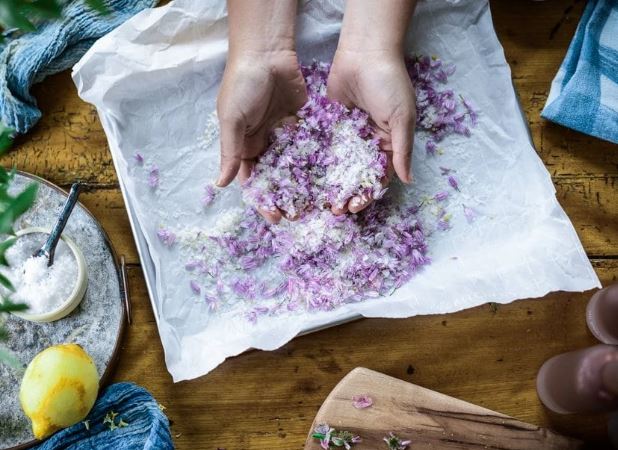
chive flowers they are not only beautiful to look at, but also edible and extremely aromatic. Their fine and slightly spicy taste goes perfectly with many dishes and gives a special touch to your cooking. Purple salt is ideal as a gift or for finishing dishes.
Ingredients and utensils
Preserve wild herbs in June
If you collect wild and aromatic herbs in June you will be able to enjoy them fresh immediately. However, preserving wild herbs is not only practical, but also a wonderful way to capture the flavors of summer. Drying, pickling, freezing, or fermenting can extend the shelf life of these herbs and ensure you have access to their flavor and health benefits year-round. Not all herbs are equally suitable for every procedure.
Read more Why you shouldn’t mow them: Their hidden healing power is amazing
Step by step instructions
- Collection and preparation: Collect fresh chive flowers, preferably on a sunny day around midday, when the dew has dried. Make sure you only use intact, clean flowers.
- Dry: Spread the flowers on a cloth and let them air dry for a few hours. This reduces moisture and prevents the salt from clumping.
- Mix: Place the dried chive flowers in a mortar or blender together with the coarse salt. Mash the mixture until the salt turns a nice purple color. Alternatively you can pour the salt and flowers into a glass in layers and leave them to infuse for a few days. Now you let it dry on a tray at room temperature for a few days or you can dry it in a dryer or in the oven at 40 degrees for two or three hours. When dry it can be bottled.
- Shop: Pour the finished chive flower salt into a clean, dry jar with a lid. Stored in a dark, dry place, it will last for several months.
Summer recipes in Wildkräuter magazine
In our current summer issue Kräuterkeller magazine (available here), in summer everything revolves around wild herbs and medicinal plants. In addition to wild herbs you will also find other ideas and recipes suitable for the season. Some of the older issues are still available in small quantities, but the magazine is very popular and always sells out quickly. You can purchase the magazine in our herbalist’s shop in both printed and digital versions www.die-moderne-Kräuterhexe.d
Possible uses of chive flower salt
Chive flower salt can be used in many ways:
- Salad: Give a special touch to your salads.
- Egg-based dishes: Perfect for scrambled eggs or omelettes.
- meat and fish: An aromatic boost for your main dishes.
- Butter: Mix salt with butter for a special flavor.
Preparing salt with chive flowers is easy and fun. The colored purple salt is not only a visual highlight, but also a delight for the taste. Try it and add more color and flavor to your kitchen! Visit our herb shop for more interesting recipes and advice on herbs and spices. Have fun trying it out and have fun!
Garden tips
Follow the world of wild herbs on our other channels. For example, do you already know ours? YouTube channel “Herb cellar”? There you will find over 300 free educational videos.
Read more You can harvest these wild herbs as early as March and you won’t have to buy any vegetables!
Conclusion
Although chives have a short flowering period, blooming only briefly in early summer, their delicate violet flowers offer much more than just visual appeal. Harvesting chive blossoms in June allows you to easily capture their delicate aroma and vibrant color, enjoying their fragrance while they are still in bloom. These flowers can be used to make chive blossom salt, transforming the fleeting beauty of the season into a lasting culinary treasure, allowing you to enjoy them even after the garden flowers have faded.
The charm of chive blossom salt lies in its balanced flavor. The flowers emit a subtle onion aroma accompanied by delicate floral notes, not as strong as the green stems, but enough to enhance the aroma of everyday dishes. When mixed with coarse salt, the petals not only impart flavor to dishes but also create a visually appealing effect. The violet petals contrast beautifully with the white salt crystals, resulting in a refined seasoning salt that is both delicious and aesthetically pleasing.
Mastering the correct preparation time is crucial to ensuring that its flavor and color reach their optimal state. Freshly picked chive blossoms, gently dried or chopped and mixed with salt, naturally release their aroma—without any artificial additives. This simple preservation method embodies the essence of seasonal cooking—making the most of the garden’s freshest seasonal ingredients and extending the enjoyment of them through creative cooking.
Beyond its pleasing appearance, chive blossom salt is versatile in the kitchen. It pairs perfectly with salads, roasted vegetables, egg dishes, spreads, and even fresh bread. A sprinkle of just a few can transform a simple dish into an elegant and fragrant feast. It also makes a beautiful and thoughtful homemade gift, a tribute to gardening and a celebration of the culinary art.
Read more The healthy boost of energy for cold days
Ultimately, picking chive blossoms now is about embracing the season and avoiding waste. Instead of letting the flowers fade quietly, process them into chive blossom salt, preserving their essence in a practical and delicious way. This simple act connects the garden and the kitchen, demonstrating how to capture fleeting beauty and enjoy its deliciousness in everyday meals.
latest posts published

how to recognize the problem and how to save your lawn
Growing Peas for Beginners: Here’s What You Need to Know
3 ways to clean the gaps between pebbles – without chemicals!
Collecting sprouts: the most common mistakes
my review on the greenhouse harvest –

Which plants and how to cover the garden at the end of winter?

Take care of the graves in autumn, so that they are beautiful even in spring

what you will find in Lithuania if you decide to try it
English style: how to create one in Lithuania